
Solutions
Turn information barriers
into a researchable path.
SEONIK Research Engine helps doers find scattered official startup information, refine their conditions through conversation, and follow changes and evidence toward the next action.
SEONIK begins with the information problems faced by people building and starting businesses.
Not just a search box,
but the full research process.
Ask a question, revise conditions, and review evidence and official sources within one continuous conversation.
- 01Question and first research
 02Context added and results updated
 03Selected result and official evidence
Research scattered official information
with one question.
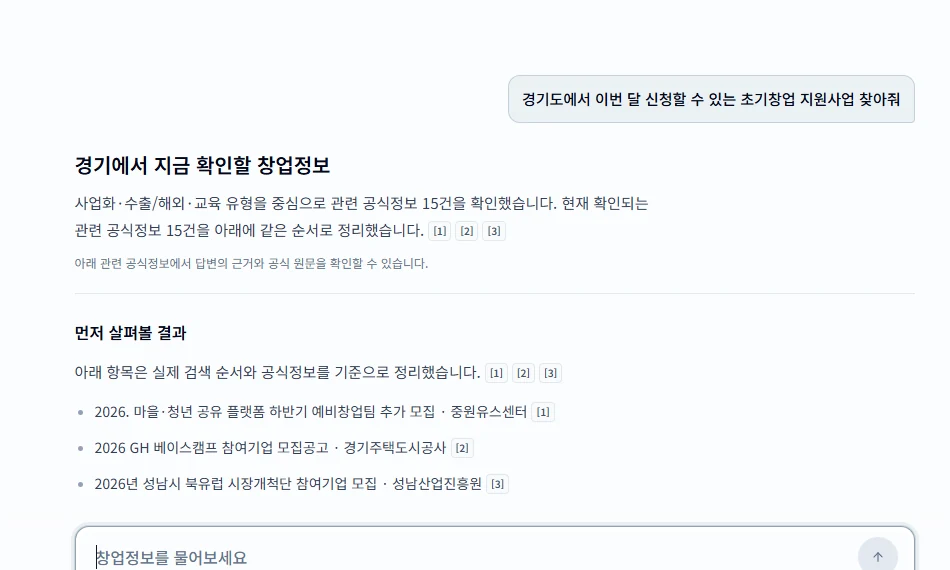
Instead of searching institution by institution, ask naturally about the region, stage, audience, and timing you need.
SEONIK researches matching results within its official-information scope.
Example questionFind early-stage startup support programs open in Gyeonggi-do this month.
Keep the doer's context,
not just the query.
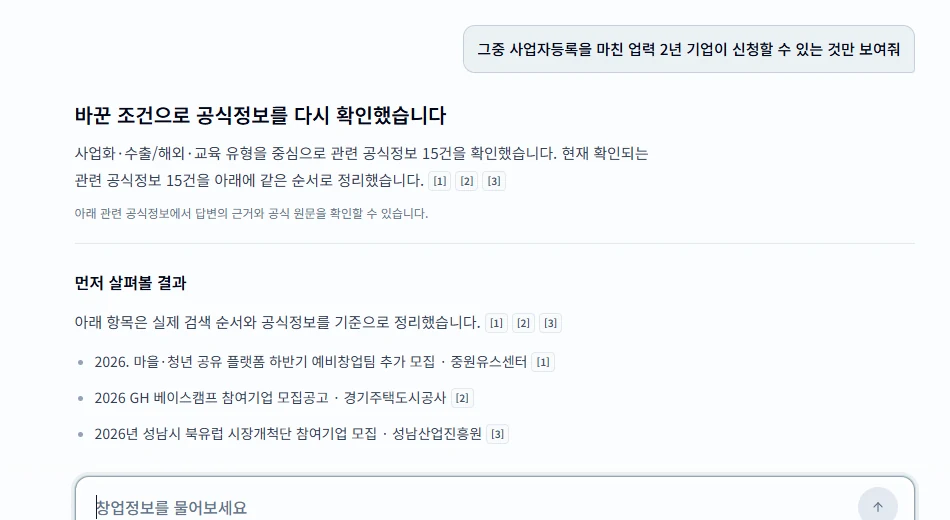
Add or revise business age, registration status, location, and areas of interest during the conversation.
Continue the same research flow without starting over.
Follow-up exampleShow only the results available to registered businesses operating for two years.
Move from results
to evidence and official sources.
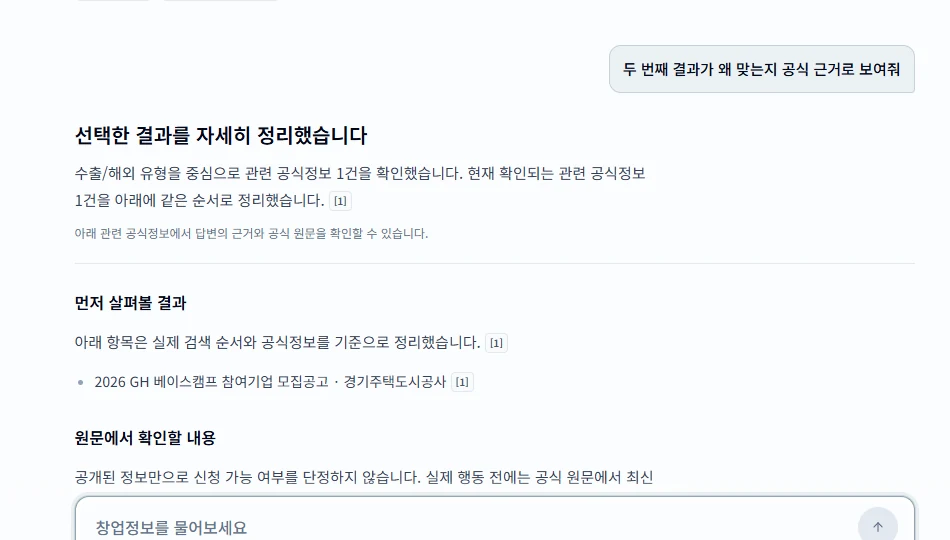
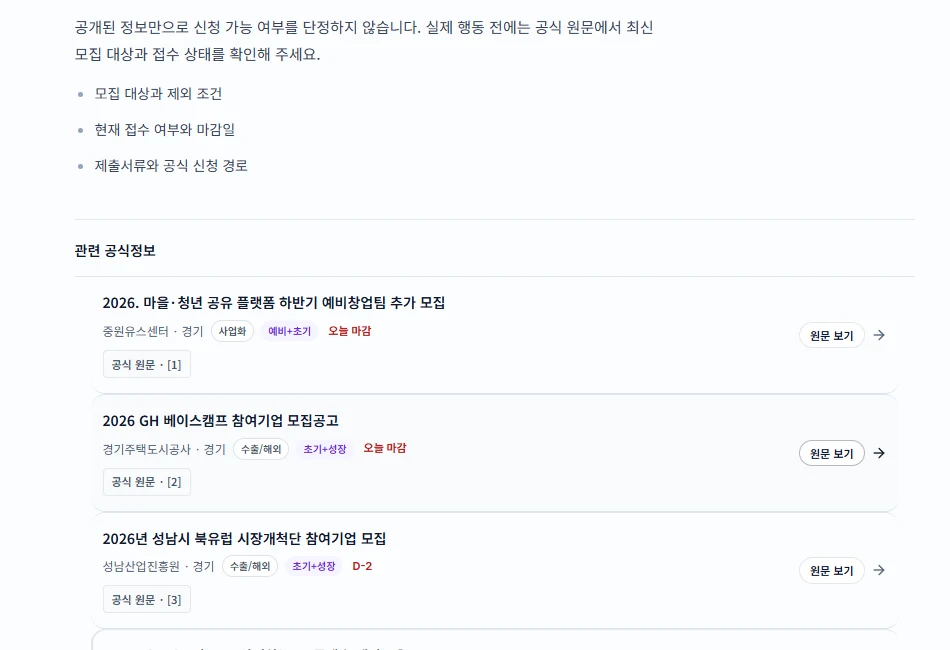
Review the answer together with related official information, the operating institution, deadline, and official link.
SEONIK does not fill unknown information as though it were confirmed.
Follow-up exampleShow me the official evidence for why the second result matches.
Stay aware of new information
and approaching deadlines.
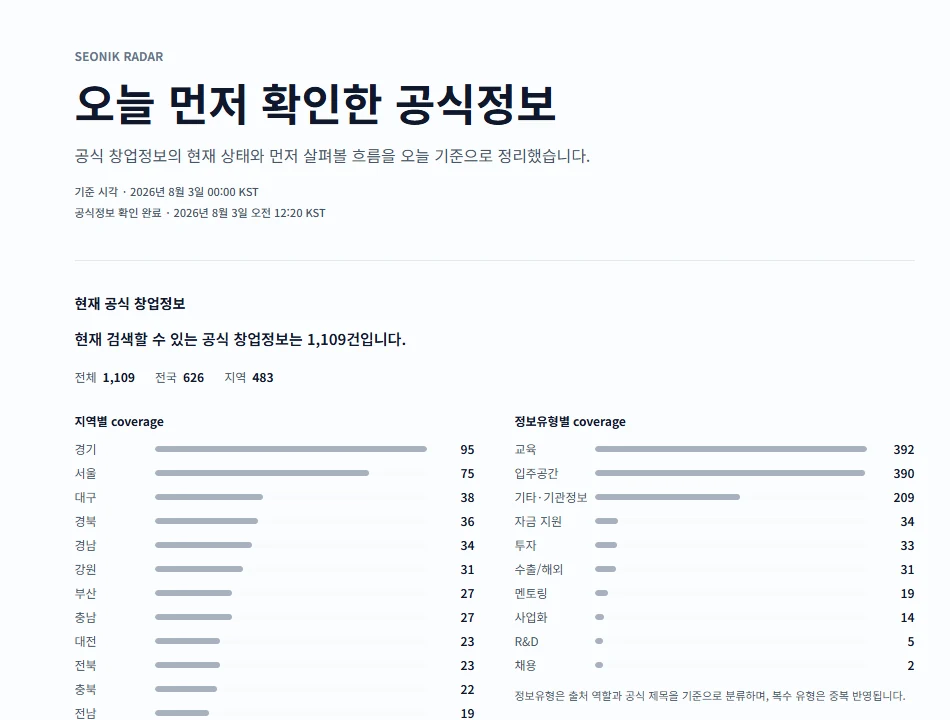
Use Radar and Today to review newly added information, approaching deadlines, and items worth checking again.
Continue directly into research when something needs a closer look.
Example questionWere any new Gyeonggi-do notices added this week?
Decision boundary
Support judgment
without replacing it.
SEONIK does not make final eligibility or selection decisions and does not guarantee outcomes.
It connects applied conditions, official evidence and sources, and the next question within one research flow.